How you prepare

The planning process for dental implants may involve a variety of initial steps.

Because dental implants require one or more surgical procedures, you must have a thorough evaluation to prepare for the process, including a:

  • Comprehensive dental exam. You may have dental X-rays and 3D images taken, and have models made of your teeth and jaw.
  • Review of your medical history. Tell your doctor about any medical conditions and any medications you take, including prescription and over-the-counter drugs and supplements. If you have certain heart conditions or orthopedic implants, your doctor may prescribe antibiotics before surgery to help prevent infection.
  • Treatment plan. Tailored to your situation, this plan takes into account factors such as how many teeth you need replaced and the condition of your jawbone and remaining teeth.

To control pain, anesthesia options during surgery include the wand local anesthesia, sedation or general anesthesia. Talk to your dental specialist about which option is best for you. Your dental care team will instruct you about eating and drinking before surgery, depending on what type of anesthesia you have. If you’re having sedation or general anesthesia, plan to have someone take you home after surgery and expect to rest for the remainder of the day.

What you can expect

Dental implant surgery is usually an outpatient surgery performed in stages, with healing time between procedures. The process of placing a dental implant involves multiple steps, including:

  • Damaged tooth removal
  • Jawbone preparation (grafting), when needed
  • Dental implant placement
  • Bone growth and healing
  • Abutment placement
  • Artificial tooth placement

The entire process can take many months from start to finish. Much of that time is devoted to healing and waiting for the growth of new bone in your jaw. Depending on your situation, the specific procedure done or the materials used, certain steps can sometimes be combined.

When bone grafting is required

If your jawbone isn’t thick enough or is too soft, you may need bone grafting before you can have dental implant surgery. That’s because the powerful chewing action of your mouth exerts great pressure on your bone, and if it can’t support the implant, the surgery likely would fail. A bone graft can create a more solid base for the implant.

There are several bone graft materials that can be used to rebuild a jawbone. Options may include a natural bone graft, such as from another location in your body, or a synthetic bone graft, such as bone-substitute material that can provide support structures for new bone growth. Talk to your doctor about options that will work best for you.

It may take several months for the transplanted bone to grow enough new bone to support a dental implant. In some cases, you may need only minor bone grafting, which can be done at the same time as the implant surgery. The condition of your jawbone determines how you proceed.

Placing the dental implant

During surgery to place the dental implant, your oral surgeon makes a cut to open your gum and expose the bone. Holes are drilled into the bone where the dental implant metal post will be placed. Since the post will serve as the tooth root, it’s implanted deep into the bone.

At this point, you’ll still have a gap where your tooth is missing. A type of partial, temporary denture can be placed for appearance, if needed. You can remove this denture for cleaning and while you sleep.

Waiting for bone growth

Once the metal implant post is placed in your jawbone, osseointegration (oss-ee-oh-in-tuh-GRAY-shun) begins. During this process, the jawbone grows into and unites with the surface of the dental implant. This process, which can take several months, helps provide a solid base for your new artificial tooth — just as roots do for your natural teeth.

Placing the abutment

When osseointegration is complete, you may need additional surgery to place the abutment — the piece where the crown will eventually attach. This minor surgery is typically done with local anesthesia in an outpatient setting.

To place the abutment:

  • Your oral surgeon reopens your gum to expose the dental implant
  • The abutment is attached to the dental implant
  • The gum tissue is then closed around, but not over, the abutment

In some cases, the abutment is attached to the dental implant metal post when the post is implanted. That means you won’t need an extra surgical step. Because the abutment juts past the gumline, however, it’s visible when you open your mouth — and it will be that way until your dentist completes the tooth prosthesis. Some people don’t like that appearance and prefer to have the abutment placed in a separate procedure.

After the abutment is placed, your gums must heal for about two weeks before the artificial tooth can be attached.

Choosing your new artificial teeth

Once your gums heal, you’ll have more impressions made of your mouth and remaining teeth. These impressions are used to make the crown — your realistic-looking artificial tooth. The crown can’t be placed until your jawbone is strong enough to support use of the new tooth.

You and your dental specialist can choose artificial teeth that are removable, fixed or a combination of both:

  • Removable. This type is similar to a conventional removable denture and can be a partial or full denture. It contains artificial white teeth surrounded by pink plastic gum. It’s mounted on a metal frame that’s attached to the implant abutment, and it snaps securely into place. It can be easily removed for repair or daily cleaning.
  • Fixed. In this type, an artificial tooth is permanently screwed or cemented onto an individual implant abutment. You can’t remove the tooth for cleaning or during sleep. Most of the time, each crown is attached to its own dental implant. However, because implants are exceptionally strong, several teeth can be replaced by one implant if they’re bridged together.

After the procedure

Whether you have dental implant surgery in one stage or multiple stages, you may experience some of the typical discomforts associated with any type of dental surgery, such as:

  • Swelling of your gums and face
  • Bruising of your skin and gums
  • Pain at the implant site
  • Minor bleeding

You may need pain medications or antibiotics after dental implant surgery. If swelling, discomfort or any other problem gets worse in the days after surgery, contact your oral surgeon.

After each stage of surgery, you may need to eat soft foods while the surgical site heals. Typically, your surgeon will use stitches that dissolve on their own. If your stitches aren’t self-dissolving, your doctor removes them.

Results

Most dental implants are successful. Sometimes, however, the bone fails to fuse sufficiently to the metal implant. Smoking, for example, may contribute to implant failure and complications.

If the bone fails to fuse sufficiently, the implant is removed, the bone is cleaned up, and you can try the procedure again in about three months.

You can help your dental work — and remaining natural teeth — last longer if you:

  • Practice excellent oral hygiene. Just as with your natural teeth, keep implants, artificial teeth and gum tissue clean. Specially designed brushes, such as an interdental brush that slides between teeth, can help clean the nooks and crannies around teeth, gums and metal posts.
  • See your dentist regularly. Schedule dental checkups to ensure the health and proper functioning of your implants and follow the advice for professional cleanings.
  • Avoid damaging habits. Don’t chew hard items, such as ice and hard candy, which can break your crowns — or your natural teeth. Avoid tooth-staining tobacco and caffeine products. Get treatment if you grind your teeth.
dental-implants-journey

Dental Implants are a popular treatment option if you need to replace missing or damaged teeth. They can help you to achieve a natural-looking smile, improve your comfort and give you a new sense of confidence. If you have missing or damaged teeth that you would like to correct, then dental implants can be an excellent solution. But you may be wondering, are they permanent? How long do dental implants actually last?

Dental implants are designed to be a permanent solution to tooth loss and they can last between 20 and 30 years. However, their lifespan depends entirely on how well you look after your teeth and your oral hygiene.

Dental implants consist of a titanium ‘root’ which is embedded in your jawbone to replicate the root section of a natural tooth. A ceramic dental crown is placed on top of the implant to replace the tooth itself. To ensure their functionality and longevity they need to be looked after just as a natural tooth would, which means daily cleaning and flossing and regular visits to a dentist and hygienist.

Dental implants have been used to replace missing teeth for thousands of years. In archaeological digs across the globe materials such as shells, gems and animal teeth have been discovered in skulls as replacements for missing teeth. In 1931 during an excavation of Mayan ruins in Honduras, Dr and Mrs Wilson Popenoe discovered a jaw that had three shells embedded in it that were carved into tooth shapes. They noticed that the bone surrounding the implant had started to regenerate, fusing with the shells and providing a solid base for the new ‘tooth’.

Modern dental implants made with titanium and ceramic offer you increased stability and allow you to use your teeth as you normally would. They can be used to correct gaps in your smile and look so natural that only you will know the difference.

Within this blog post, we will be exploring how the lifespan of dental implants can be altered by different factors, how you can maintain the integrity of your dental implants and ways that you can ensure an excellent oral hygiene routine.

What can affect their lifespan?

As we’ve already outlined, the lifespan of dental implants can be up to 30 years if they are properly maintained and cared for. As with any dental treatment, different factors can reduce how long a dental implant may last, these include:

  • Oral health.
  • Lifestyle choices.
  • Injury or damage.
  • Medical conditions.
  • Which teeth are replaced and where they sit in the mouth.

One or more of these elements can affect how long dental implants last and can also impact on your overall oral health. It is always best to discuss all the available options with your dentist and talk through any existing medical conditions before you begin treatment. They will then be able to assess whether dental implants are the right option for you.

Oral health

Once you have had a dental implant fitted, you will still need to look after them just as you would your natural teeth. For the titanium root to successfully fuse, you will need to ensure that your gums are healthy and that your jawbone is dense enough. Any gum disease will need to be treated before implants are put in place and your dentist will check to make sure your jawbone is dense enough to hold an implant securely.

Although titanium and the ceramic crown on top are resistant to decay, the teeth and gums surrounding the implant are not. This is why very good oral hygiene is essential.

You will still be susceptible to issues like gum disease even with dental implants in place and so you need to ensure that you maintain a high level of oral care. Gum disease is the most common cause of tooth loss amongst adults, it can cause discomfort and can also have an impact on your overall physical health.

Making sure that you brush your teeth twice a day and floss as often as possible will help to reduce the build-up of plaque and keep your gums healthy.

In the majority of cases the titanium root will last a lifetime and it is usually the ceramic crown that will need replacing. However, if you do suffer from gum disease and have dental implants fitted, there is a higher risk of the implant failing and being rejected.

Even if you maintain high levels of oral hygiene, other factors can cause problems for your oral health.

Lifestyle choices

Lifestyle choices such as excessive smoking and heavy drinking can have a dramatic effect on how long your dental implants last.

This is especially important to consider in the early stages of your dental implant treatment. For your dental implants to heal properly, your body depends on sufficient blood flow to the treated area. Nicotine affects your blood vessels, oxygen levels and blood flow and can slow down your recovery.

Smoking also leads to a greater chance of producing bacterial plaque which turns into gum disease if not treated properly. When you smoke, you are reducing the amount of oxygen in the bloodstream, meaning that gums which are infected cannot heal properly. If you were to smoke before your implant is fully healed, you risk causing an infection and prolonging the healing process.

After having your implants fitted, it is highly recommended you wait at least 72 hours before having an alcoholic drink. This is because your body needs time to heal and start the recovery process. Alcohol causes your blood to thin, meaning that it will not be able to clot effectively after surgery to help your gums to heal. Drinking excessive amounts of alcohol can also cause dehydration. This means that the tissues in your mouth could potentially ‘dry out’ and not be able to heal correctly.

Injury or damage

Sometimes, dental implants have a limited lifespan due to circumstances that are beyond your control. While dental implants are a permanent treatment option, the ceramic crowns are not indestructible. Just like your natural teeth, ceramic crowns are susceptible to cracking and damage.

There are several ways in which dental crowns can become damaged:

  • Facial injuries.
  • Chewing hard substances such as brittle sweets or ice.
  • Eating sticky or chewy foods.
  • Using your teeth as tools to open bottles or plastic packaging.

While your natural teeth and your dental implants can withstand some pressure and force, it should be limited to eating and chewing foods. By using your teeth as tools, the length of time your dental implants will last before needing to be replaced will be greatly reduced.

If you use your teeth as tools to open things like bottles or plastic packaging, you are not only risking damage to your dental implant but also your gums and your natural teeth as well.

If the ceramic crown part of your dental implant does become damaged for one of the reasons outlined above, your dentist may be able to fix it without having to replace it. This depends entirely on how damaged the crown is and whether the titanium root is also affected.

Once fully healed, the root of your implant will be fused with your jawbone. If your jaw sustains damage your dental implant could be knocked loose, just like the root of a natural tooth. If this is the case, you may have to wait for your jaw to heal before having your implants refitted.

Medical conditions

Certain pre-existing medical conditions can also affect how long dental implants last. For example, conditions such as diabetes or a weakened immune system can impact on the effectiveness of your treatment and also how long your dental implants will last before they need to be replaced.

Both diabetes and a compromised immune system can make you more susceptible to infections and can cause your body to take longer to recover and heal.

How well you manage your diabetes will affect how long your dental implants will last. If you do not have your diabetes under control, then you will be more susceptible to infections and implant failure.

As already mentioned, the process of osseointegration, the fusing of the titanium root to the bone, is paramount to how long dental implants last and their success rate. Your gums need to heal completely and be as healthy as possible to accept the implant and ensure the longevity of the treatment.

Before undergoing any treatment, you should make your dentist aware of any medical conditions that you currently have or are being treated for. They will be able to assess your situation and create a treatment plan that is tailored to your specific needs.

Which teeth are replaced

The lifespan of a dental implant is also affected by the type and position of the tooth being replaced. This is because all of your teeth have different functions and roles to do with chewing, eating, biting and speaking. For example, the teeth at the back of your mouth are used primarily to chew food and are put under additional pressure more regularly.

Grinding your teeth is another factor to consider when thinking about how long dental implants last. Bruxism is the name for the condition where a patient grinds their teeth or clenches their jaw repeatedly and with excessive force. This puts huge pressure on teeth and wears them down over time and can even cause chips or a crack to appear. Bruxism will affect both natural teeth and dental implants but can be alleviated with a removeable mouth guard often worn at night to prevent damage to the teeth.

During the dental implant healing process, grinding your teeth or clenching your jaw can disrupt recovery and, in some cases, cause the implant to be rejected from the bone. If your implant has healed, the constant force and pressure of being crushed and clenched can cause the implant to be dislodged in some extreme cases. If you believe that you may suffer from bruxism, speak to your dental practitioner before you begin treatment so that this can be factored into your care plan.

How to maintain your Dental Implants

How long dental implants last differs from patient to patient and depends on how well you look after your teeth and your overall oral health.

Dental implants can be cared for in the same way as your natural teeth. Making sure that you brush your teeth twice a day and flossing will help to keep your gums and teeth healthy and reduce the build-up of plaque and biofilm. Not only will this keep your teeth and gums healthy, but it will also stop you developing bad breath.

Just because your teeth are artificial does not mean that you shouldn’t attend regular dental check-ups. During these appointments, not only will your dentist assess your oral health, but they will also be able to check for any issues with your implants. Cracks or damage to the crown can be identified quickly, and your dentist will discuss with you the best way to fix any issues.

Regular hygiene appointments will also help to keep your teeth and gums as healthy as possible, ensuring that your dental implants last as long as possible. During your hygiene appointments, you will be shown how to properly care for and clean your natural teeth and your dental implants.

Using your dental implants to eat and chew food only, will have a positive impact on their lifespan and condition. Trying to open bottles or plastic packaging with your dental implants and/or using them as tools puts unnecessary pressure on them and will limit their longevity.

Find out more

To answer the question, how long do dental implants last, the answer varies. While they can last between 20 and 30 years, their true lifespan depends on how well you maintain and care for them and how good your oral hygiene routine is.

Here at Revitalise our resident implantologist, Dr Singh, is on hand to talk you through every stage of your dental implant treatment. We also have a dedicated dental hygienist who will be able to help you improve your oral health and teach you how to look after your dental implants.

We believe in giving our patients as much information about their treatments as possible. Allowing them to understand every step of the process and make educated and well-informed decisions about their care.

That is why we have created a handy and comprehensive Dental Implant download guide which explains in more detail what dental implants are and how they can offer you a comfortable and natural-looking smile.

If you have been considering getting dental implants to replace missing or damaged teeth, our team are on hand to guide you through the process.

If you have any questions about the treatment process or your overall oral health, then please do not hesitate to get in contact with us.

denture supported implants

The average lifespan for a well-maintained dental crown is typically around 15 years. However, when taken care of properly, it is common to see them last upwards of 25-30 years. The mouth is a complex system, and there are many factors that can affect the longevity of a crown, including a person’s oral hygiene habits, along with the day-to-day wear it is exposed to.

How Can I Extend the Lifespan of my Crown

  • Avoid clenching or grinding your teeth. This type of trauma to your crown can cause it to chip or crack. If you have a tendency to clench or grind, it is recommended that you wear a custom-made night guard while sleeping. This will protect your crowns as well as your natural teeth.
  • Always practice good dental hygiene routines, including brushing twice a day and flossing once a day. When brushing, pay special attention to the area around the crown, especially the gum line. This will help to protect the area under the crown from decay.
  • Do not bite fingernails or chew on ice, hard candy, or any other hard objects. This can cause damage to crowns as well as natural teeth.
  • Attend routine dental cleaning and checkup appointments. At these visits, your dentist will examine your crown for any signs of decay, trauma, or gapping between the tooth and the crown.

How Do I Know When My Crown Needs Replacing?

The amount of wear on a crown is unique to each individual and, though porcelain crowns are durable, they are not indestructible. A crown needs to be replaced if it is chipped or cracked. Allowing a damaged crown to remain in your mouth can increase the chances of decay forming under the crown. Though a crown itself cannot decay, cavities can still form underneath if proper oral hygiene routines are not maintained. Depending on the condition of the crown and extent of the decay, a replacement crown could be necessary. If this decay is not taken care of properly, the tooth might require a root canal. An imbalanced bite, or a crown that was not expertly made and fitted to your bite, could be a reason why a crown would fail earlier than expected. This is one of the most common causes of crown failure. Fortunately, most insurance companies will cover the replacement of a crown if it is over five years old.

More Questions?

Just because a crown is old, does not mean it needs to be replaced. Your dentist should alert you to any warning signs that your crown might fail. A well-maintained crown is an investment that can last you a lifetime. If you are in need of a dental crown, have any questions, or would like to schedule a consultation with one of our experts, please contact our surgery.

best dentist for broken teeth

Veneers and crowns are two types of restorative solutions that can be used to save your smile. They can both improve the appearance and function of your teeth. Because they seem to provide the same benefits, many people assume that veneers and crowns are the same thing. However, while these two treatments may seem similar, there are some major differences between them. To help you figure out which dental restoration method is right for you, here is a glimpse at the difference between veneers and crowns, how they work, and when each method should be used.

What Are Porcelain Veneers?

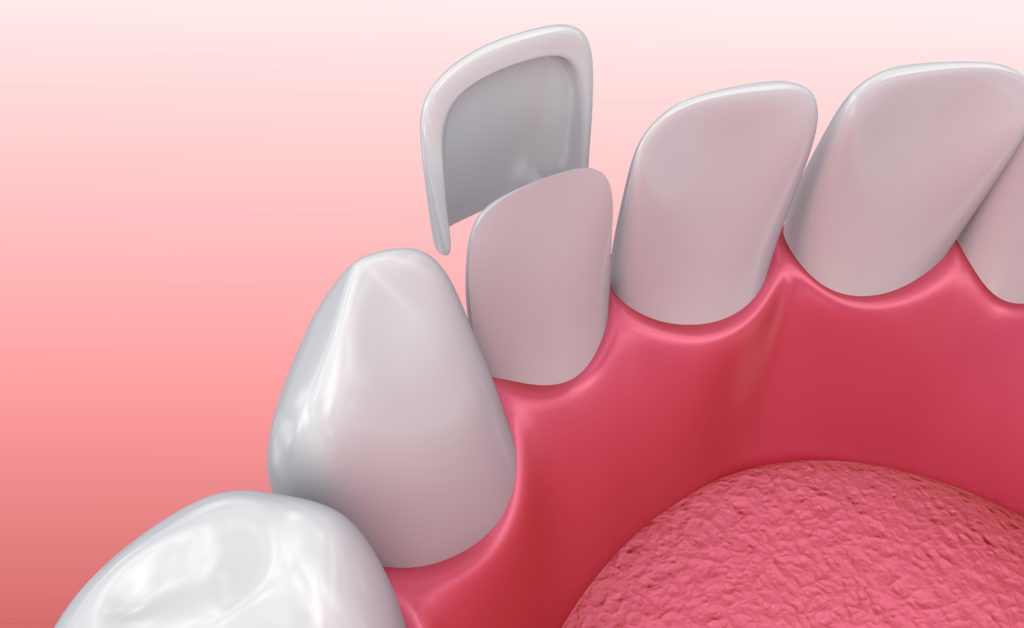
Porcelain veneers are made from thin layers of fine, stain-resistant dental porcelain and are usually only about one millimeter thick. Veneers are a noninvasive cosmetic dentistry option, with the procedure leaving most of your existing tooth intact. They are custom designed for each patient so that they securely cover the front surface of your tooth. To prepare your tooth for a porcelain veneer, your dentist will grind down about half a millimeter of the enamel on the front of your tooth to make it easier for the veneer to bond, as the cement will stick best to a rougher surface. However, the amount of enamel that needs to be filed down can vary depending on the type of veneer. It is important to note that a veneer can only be placed on a tooth that has plenty of existing enamel.

What Are Dental Crowns?

A dental crown completely covers the entire tooth, which means more of the tooth will need to be filed down before a crown can be placed. Crowns are typically used to restore teeth that have been badly damaged by decay, cracks, or fractures. If tooth decay is the reason you need a dental crown, your dentist will need to remove the decayed part and possibly rebuild some of the tooth so that it can support the crown. Dental crowns are usually molded from either porcelain, porcelain fused to a metal alloy (PFM), or an all-metal alloy. Your dentist will fabricate the crown to securely fit over your tooth and then cement it into place.

Veneers vs Crowns: How Are They Similar?

Both veneers and crowns are dental treatments that improve the appearance and function of teeth. They are typically used to restore teeth that are somehow damaged, whether discolored, crooked, decayed, chipped, cracked, or broken. Veneers and crowns are both made to match the color of the rest of your teeth—with the exception of all-metal crowns—to give you a seamless, complete smile. Once they are applied, it’s difficult to tell the difference between a veneer and crown because they will each have a similar effect on your smile. You will care for both veneers and crowns virtually the same way. You’ll need to brush them twice a day just like the rest of your teeth and floss to remove food particles. Regular dentist visits will also be needed for professional cleaning and to check the restorations.

Veneers vs Crowns: How Are They Different?

The biggest difference between veneers and crowns is how they fit your tooth and the reason behind needing them. A porcelain veneer is bonded to just the front surface of your tooth, while a dental crown covers your entire tooth. This tends to make veneers more aesthetically pleasing than crowns because they show less gum margin. Crowns are thicker than veneers—two millimeters compared to one millimeter—and are more permanent. Veneers may need to be replaced after a certain number of years, but crowns may be able to last most of your life.

How Much Do Veneers and Crowns Cost?

Porcelain veneers can typically cost anywhere between £525 and £900 per tooth. Dental crowns, on the other hand, usually fall in the range of £525 to £1100 per tooth. Porcelain and ceramic crowns are more expensive than their all-metal counterparts. However, dental insurance will often cover part of the cost of crowns, but it will not usually cover the cost of veneers since they are considered cosmetic. Whether you need a veneer or crown, your dentist will likely be able to provide a payment plan to make the dental treatment easier for you to afford.

Is a Veneer or Crown Right for Me?

Since veneers and crowns seem to provide basically the same function, they can be used interchangeably, right? Actually, no. Your dentist will recommend one dental treatment option over the other based on your specific situation. Dental crowns are typically the best option if your tooth is very damaged, has a large filling, or has undergone a root canal, since the tooth enamel is more compromised and will need better protection. Porcelain veneers, on the other hand, are best for purely cosmetic purposes. If your tooth is mostly intact and only needs minor shape correction or an improved appearance, then your dentist will likely recommend porcelain veneers.

Restorative and Cosmetic Dentistry in Solihull, Birmingham

Do you have a tooth or multiple teeth that need correcting? Here at Eternal Smiles Dentists, our experienced dentists can help you determine whether porcelain veneers, dental crowns, or other treatment options are best for you. Whether your tooth needs to be fully restored with a crown or you just want to improve the appearance of your smile with a natural-looking set of porcelain veneers, we can provide you with the restorative and cosmetic dentistry services you need to achieve a healthy, beautiful smile. We offer an array of full-mouth reconstruction treatment options as well as multiple cosmetic dentistry procedures that can help you achieve a smile that you’ll be proud to show off.

Give Eternal Smiles Dentists a call today to schedule an appointment

gum lift

Porcelain veneers will stain, but resin coated porcelain takes longer than other materials will to develop staining. That’s one of the many factors that make porcelain veneers a great cosmetic dentistry solution. For patients who enjoy a morning cup of coffee or a glass of red wine with dinner, veneers offer a stain-resistant cosmetic solution to dental discoloration. With proper care, your porcelain veneers will stay pearly white for as long as ten years, and by then, it will be time for the recommend repair or replacement of your veneer.

What are Veneers Made of?

Veneers are made from a high quality, dental grade porcelain. This quality porcelain is crafted to precise specifications by a team of dental lab technicians before being placed in our office. The strong porcelain is also coated in a clear resin. This resin coating is what prevents veneers from staining. It fills in the porous surfaces of the porcelain and keeps your smile looking sparkling bright. The stain resistant resin does wear away over time, and you will begin to see some gradual staining to your veneers just like with natural teeth.

How are Veneers Placed?

Porcelain veneers take two appointments for our team to complete. During your initial visit, we will prepare your teeth by removing a small amount of surface enamel. This allows the veneer to fit within your smile. Then, we take impressions that will be used by our lab to craft your restoration. To let you get used to the look and feel of your new smile, we will place a temporary veneer. When we receive the final veneers from the lab, you’ll return to exchange the temporary for your flawless, permanent porcelain veneers.

How do I Care for my Veneer to Prevent Staining?

To keep your porcelain veneer looking great longer, you should take the time to care for your smile in our office and at home. While you will not likely need to make many changes to your brushing and flossing routine, we may want to talk to you about your oral hygiene products. In order to prevent excessive wear to the stain-resistant resin, we recommend you use an ultra soft toothbrush and minimally abrasive toothpaste. You may also want to switch to a waxed floss or water flosser to avoid pulling around the edges of your veneer. During your biannual dental checkups, we’ll examine your veneers for signs of wear or damage and partner with you to make repairs to preserve your porcelain veneer.

Meet Dr. Singh

Dr Singh is a skilled cosmetic dentist serving patients in Birmingham. At Smile Specialties, Dr. Singh and his dedicated dentistry team offer a wide array of cosmetic solutions to help patients create the flawless smiles of their dreams and keep them looking great. If you’re interested in porcelain veneers, teeth whitening, or any other smile makeover solutions, please contact us to schedule a cosmetic dentistry consultation in our state-of-the-art Solihull dental office. We look forward to partnering with you to achieve and maintain your healthiest smile.

best dentist for temporomandibular-joint Birmingham

The lifespan of dental veneers depends on whether you have porcelain or composite veneers, and how well you care for them. Porcelain laminate veneers can last from 10 to 12 years. Composite resin veneers need to be replaced sooner, since they last for around 4 to 8 years.

What is the difference between composite and porcelain veneers?

Composite veneers are made from a synthetic mix of resin (plastic) and glass, which is applied to the tooth one layer at a time. Porcelain laminate veneers are thin “shells” of porcelain that are bonded to the front of the tooth.  A closer look at composite veneers… Benefits:

  • Not as expensive as porcelain veneers
  • Chips and cracks can be repaired
  • Less enamel is removed from the natural teeth

Potential drawbacks:

  • Less durability and stains show up more easily
  • The lifespan is shorter than porcelain veneers
  • Composite veneers don’t look as natural as porcelain, appearing bulkier

A closer look at porcelain veneers… Benefits:

  • More durable and resists stains better than composite veneers
  • Extremely natural aesthetics
  • Longer lifespan

Potential drawbacks:

  • Damaged veneers can’t be repaired, they must be replaced
  • Treatment takes longer to complete (normally 3 days)

Will I Need To Replace My Veneers?

Yes, most patients replace their veneers at some stage over their lifetime, as veneers last up to 12 years. When this time comes, your dentist will polish and redo your veneers.

A tiny amount of enamel is removed with the old veneers. If your natural teeth no longer contain enough enamel to sustain a new veneer, a crown may be a suitable replacement.

Why do veneers need to be replaced?

Dental veneers may need to be replaced if:

  1. The gums gradually pull back, exposing the margin between the root of the tooth and veneer. There may be a stain or fine brown line on this margin.
  2. Veneers may chip or break over time as the material (porcelain or composite) weakens with the pressure of daily use.
  3. Veneers break from changes to the bite caused by tooth loss, erosion or decay.

Why do composite veneers need to be replaced sooner?

Composite resin is less durable than porcelain; causing the veneers to chip and break more easily than porcelain veneers. The composite material also tends to stain more easily. This means that composite veneers generally have a shorter lifespan (around eight years) than porcelain veneers.

before and after picture for a young lady after having her ceramic veneers

Are veneers the best option?

Dental veneers are suitable for people who want to hide minor dental imperfections and smile with confidence. The main purpose is to improve the cosmetic appearance of teeth. Dental veneers look and feel like natural teeth, so they’re difficult to detect. This is a suitable option for people with healthy gums and teeth. Popular reasons for getting veneers:

  • Broken, chipped or cracked teeth
  • Discoloured or stained teeth
  • Gaps between teeth
  • Obvious fillings
  • Crooked, oddly shaped or eroded teeth
  • Teeth that stand out because they’re too small or uneven
  • A small amount of crowding in the mouth

Please note, your dentist will speak to you about alternative treatments if you have active gum disease or badly damaged teeth (veneers aren’t suitable in such cases).

Where should I get my veneers?

Any reputable dentist can install your veneers – but if you have the option – seek out our dentist who lets you “test drive” your new smile before committing to a treatment plan. This stops you from wasting money on results you don’t completely love!

best dentist eternal Smiles dental Centre

Why did the toothache stop suddenly?

If a pain you’ve been feeling goes away, you might believe the problem that caused it is gone too. But that doesn’t mean it has, especially with a tooth. An excruciating toothache that suddenly stops should still be examined. Here’s why.

Tooth decay often works its way into a tooth’s innermost layer, the pulp, which contains bundles of nerves and other tissue. The infection attacks the nerves, which send pain signals to the brain. As the infection persists, though, the nerves will eventually die and will no longer be capable of sending pain signals — hence the “mysterious” end of your toothache.

Although the pain has stopped, the infection is very much active in the tooth and will continue to work its way through the root canals to the jaw. And ultimately, the pain will return as the infection invades the bone.

But there’s good news: a tooth in this condition can be saved with a procedure known as root canal therapy. We drill a small hole in the tooth to access the pulp, usually through the biting surface of back teeth or in the rear in front teeth. Once inside the pulp chamber, we clean out the infected and dead tissue. We then fill the empty pulp chamber and the root canals with a special filling and seal the access hole. In a few weeks the tooth receives a life-like crown to further protect it from re-infection and fracture years later.

A straightforward root canal treatment can be performed by a general dentist. If there are complications like a complex root canal network, however, then the skills and specialized equipment may be needed.

A root canal treatment resolves the real cause of a toothache that suddenly stopped, as well as puts an end to future pain and infection related to the tooth. More importantly, it can save your tooth and add many more years to its life.

You can also learn more about this topic by reading the Dear Doctor magazine article “A Severe Toothache.”

The benefits of holistic dental care

If you want to live a more natural lifestyle, your holistic practices should be a part of your everyday life. You’ve used holistic methods to help aches and pains, and now you can use holistic dental care to improve not only your oral health but the health of your whole system.

Are you new to the world of holistic dentistry? Follow these tips to help you start out!

1. Freshen breath with sea salt and mint

Do you use mouthwash because it helps you feel refreshed and clean? Instead of swishing chemicals around your mouth, try an all natural and gentle solution.

Mix sea salt with some warm water and add a small amount of mint or mint essential oil. The salt will help improve your gum condition, and the mint will kill bacteria and freshen your breath.

2. Clean your tongue

When people think about mouth care they envision brushing their teeth, but tongues deserve just as much attention. Bacteria love to live on the tongue, and if it isn’t properly cleaned the harmful microbes will grow and spread.

A simple way to practice holistic dental care is to use a tongue scraper. It’ll get rid of harmful bacteria and keep your mouth clean. This is actually a process that has been recommended for centuries in Ayurvedic medicine.

3. Floss

If there’s one thing holistic dental practitioners and traditional dentists can agree on, it’s the importance of gum health. If you want to have a healthy mouth, you need to care for your gums.

One of the easiest ways to care for your gums is to floss regularly. Avoid getting floss that has fluoride, look for brands that can assist your gum health like Neem or coconut floss.

4. Maintain a good diet

The saying, “You are what you eat” is true when it comes to health. If you have a poor diet, your dental  health will fade.”

Eat lots of fruits and vegetables, and be sure to get enough Vitamin C which will help with your gum health. Also, be sure to stay hydrated and to avoid sugary drinks and fruit juices.

5. Keep BPA and Fluoride free fillings in mind

Do you have a cavity you need to get filled? If so, make sure you visit a holistic dentist.

Regular fillings can contain mercury, which can be harmful to people. Holistic dentists will use mercury free fillings and materials that have been tested for their safety.

Step 1: Consultation

  • Assessment of your medical history, dental history and chief complaint
  • Clinical assessment of the area/tooth
  • Explanation of what the procedure entails, what to expect before, during and after the procedure
  • Costs involved with treatment
  • Need of referral to a registered specialist (Endodontist)
root canal treatment in solihull

Step 2: Second appointment

  • Treatment commences with local anaesthetic to numb the area, followed by placement of a rubber dam to isolate the tooth from the rest of your mouth.
  • Access to the pulp chamber and canal(s) for cleaning purpose and sealing of canals with a final root filling (root canal treatment). However, sometimes it is necessary a subsequent visit(s) to complete treatment. Your dentist will inform you if necessary.

It is important to remove all carious lesion (tooth decay) and any defective restorations prior to root canal treatment. It makes sure tooth holds a strong, sound structure.

Temporary fillings may be necessary in between visits to avoid recontamination of canals. It would happen if the tooth was left open.

Root canal treatment is not 100% successful however the success rates are very high if treatment is done well in the first place and the tooth is not left unattended to for too long (it may cause the canals to become heavily infected, therefore lowering success rates).

It is essential to protect the tooth with a full crown after the treatment is completed.

root canal treatment

Step 3: Third Appointment

Medicine is placed to help the tooth get even more better.  The tooth is sealed to prevent bacteria entering the top part of your tooth.

Step 4: Finish the rooth canal treatment

The root is root filled with special filling material at Eternal Smiles Dental Centre.  Then a fiber post is placed in one of the canals to hold a core filling at the top of the tooth.  

The next part is to finish the tooth with a full ceramic crown. 

Success rate of root canal treatment :

The success rates are very high if treatment is done well in the first place and the tooth is not left unattended to for too long before you come in to see us at Eternal Smiles Dental Centre.  If you do wait for months before you see us the canals become heavily infected, therefore lowering success rates.

It is essential to protect the tooth with a full crown after the treatment is completed.  Like a wet leave is flexible but once it is drys out (like when your tooth dies and the blood and liquids disappear.

We use lasers to help your tooth get better.  Lasers provide the best success rates for your tooth.

Root canal treatment or endodontic treatment, may be a solution for you if you are looking to save a tooth where the pulp has been compromised due to carious lesion (tooth decay), an infection, or another oral issue such as dental trauma.

The pulp is located within the centre of your tooth and within the centre of each root of a tooth. It is the soft area which contains:

  • Blood vessels
  • Connective tissue
  • Nerves

These key components help the root of your tooth to grow and flourish during its development. Therefore, if the pulp is damaged or becomes infected mainly with bacteria, an infection may spread beyond the confines of the root.

The aim of root canal treatment is to remove the damaged pulp tissue and reduce bacterial presence inside the canals so that your tooth does not have to be removed. It helps to restore your tooth so that it can function naturally again.

What happens if I leave an infected root canal untreated?

If you leave a root canal untreated you may risk your whole tooth being extracted or be exposed to other issues that may affect your oral health such as:

  • Chipped tooth
  • Worsening of carious lesion (tooth decay)
  • Enhanced pain from your tooth
  • Risk of an abscess forming
  • Tooth sensitivity

If you experience any of these symptoms, you should consult with your dentist immediately or at your next appointment. Your dentist will be able to advise the best course of action to take to treat your condition.

root-canal treatment